From Zion- Great Song and Cover Performances: There are some songs that you don’t truly appreciate until another artist takes it on and makes it their own. Oftentimes the newer version draws out the original’s complexities in a way you never would have noticed before. Or maybe the first version is equally compelling, but the cover artist re imagined it with such grandeur .
Follow Stephen Darori on Twitter, Linkedin and Facebook .
"Ramrod" is a song written and performed by Bruce Springsteen for his fifth album, The River, released in 1980. It was recorded at The Power Station in New York in June 1979. The song was actually written earlier and recorded for Springsteen's Darkness on the Edge of Town album, but that recording was not used for its release on The River.
Although "Ramrod" was never released as the A-side of a single, it reached #30 on the Billboard Hot Mainstream Rock Tracks chart in 1981.It has remained a popular song in concerts by Bruce Springsteen with the E Street Band, with about 410 performances through 2008, and appearing on both the CD and DVD versions of Live in New York City.
In the Netherlands, "Ramrod" was released as the B-side of the "Point Blank" single in 1981. In other countries it was released as the B-side of "The River".
Weinberg grew up in suburban New Jersey and began drumming at an early age. He attended college planning to be a lawyer but got his big break in music in 1974 when he won an audition to become the drummer for Springsteen. His powerful but controlled playing on albums such as Born to Run and Born in the U.S.A. stabilized the E Street Band sound and Weinberg became a mainstay of Springsteen's long concert performances. Springsteen dissolved the band in 1989, and Weinberg spent several years considering a law career and trying the business end of the music industry before deciding he wanted to continue with drumming.
In 1993, Weinberg got the role as bandleader of The Max Weinberg 7 for Late Night with Conan O'Brien. Weinberg's drums-driven jump blues sound and his role as a comic foil prospered along with the show, giving him a second career. In 1999, Springsteen re-formed the E Street Band for a series of tours and albums; Weinberg worked out an arrangement that allowed him to play with both O'Brien and Springsteen. In 2009, Weinberg moved to the short-livedTonight Show with Conan O'Brien as leader of Max Weinberg and The Tonight Show Band. After that ended, he began touring with his own ensembles, and in 2010 chose not to follow O'Brien to the new Conan show. Weinberg continued playing with Springsteen, and in 2014 was inducted into the Rock and Roll Hall of Fame as a member of the E Street Band.
If I Should Fall Behind Bruce Springsteen with The Seeger Sessions Band Milan, 12th May 2006. Nice waltz version.
As hushed and solemn as a hymn,Bruce Springsteen's ballad from Lucky Town was a tender letter of devotion to wife Patti Scialfa, as they navigated a new life (the couple had their first child in 1990 and were married in 1991). "You and I know what this world can do/So let's make our steps clear that the other may see," he sang. As Springsteen told a 1992 crowd in California, "This is my best song about making even small connections."
We said we'd walk together baby come what may That come the twilight should we lose our way If as we're walkin a hand should slip free I'll wait for you And should I fall behind Wait for me
We swore we'd travel darlin' side by side We'd help each other stay in stride But each lover's steps fall so differently But I'll wait for you And if I should fall behind Wait for me
Now everyone dreams of a love lasting and true But you and I know what this world can do So let's make our steps clear that the other may see And I'll wait for you If I should fall behind Wait for me
Now there's a beautiful river in the valley ahead There 'neath the oak's bough soon we will be wed Should we lose each other in the shadow of the evening trees
I'll wait for you And should I fall behind Wait for me
Darlin' I'll wait for you Should I fall behind Wait for me
Vivienne Patricia "Patti" Scialfa (/ˈskælfə/, skal-fah; Italian pronunciation: [ˈʃalfa], shahl-fah; born July 29, 1953) is an American singer-songwriter and guitarist. Scialfa has been a member of the E Street Band since 1984 and has been married to Bruce Springsteen since 1991. In 2014, Scialfa was inducted into the Rock and Roll Hall of Fame as a member of the E Street Band.
Music Career
While in college, Scialfa was submitting original material to other artists in the hope that it would be recorded. However, none of her songs were recorded, and after graduating, Scialfa worked as a busker and waitress in Greenwich Village. Together with Soozie Tyrell and Lisa Lowell, she formed a street group known as Trickster. For many years, she struggled to make her way in the songwriting and recording industry in New York and New Jersey before playing at Folk City and Kenny's Castaways in Greenwich Village, as well as Asbury Park's The Stone Pony. Scialfa had a brief role in The Stone Pony's house band Cats on a Smooth Surface. These gigs won her notice and, eventually, recording work with Southside Johnny and David Johansen.
In 1984, Scialfa joined the E Street Band, three or four days before the opening show of the Born in the U.S.A. Tour. In 1986, she appeared on the Rolling Stones' Dirty Work album, leaving her unique vocal mark on "One Hit (To the Body)" as well as other tracks. She worked with Keith Richards on his first solo disc Talk is Cheap. Steve Jordan, who co-produced the Richards record, was a friend of Scialfa's from her Greenwich Village days.
Scialfa maintains her music industry friendships over many years. Her friendship with Soozie Tyrell and Lisa Lowell pre-date their mutual work as background vocalists and musicians on the Buster Poindexter 'aka' David Johansen album (featuring a Soca song by Arrow, "Hot Hot Hot!") in 1987; Lowell and Tyrell have since worked on various Springsteen-Scialfa recording projects and Tyrell, violinist, has recorded and toured with Springsteen and the E Street Band.
Scialfa has recorded three solo albums, 1993's Rumble Doll, 2004's 23rd Street Lullaby and 2007's Play It as It Lays. Her first two albums received four-star reviews from Rolling Stone, while the third got three and a half. Her records are a mix of confessional songwriting, impressive vocal range, and traditional country, folk and rock music. Springsteen and fellow E Street bandmates, like Lofgren and Roy Bittan, contributed backing work. Following the release of her second album, Scialfa played a series of club dates along the East Coast and she was also the opening act of the post-final night of the Vote for Change tour.
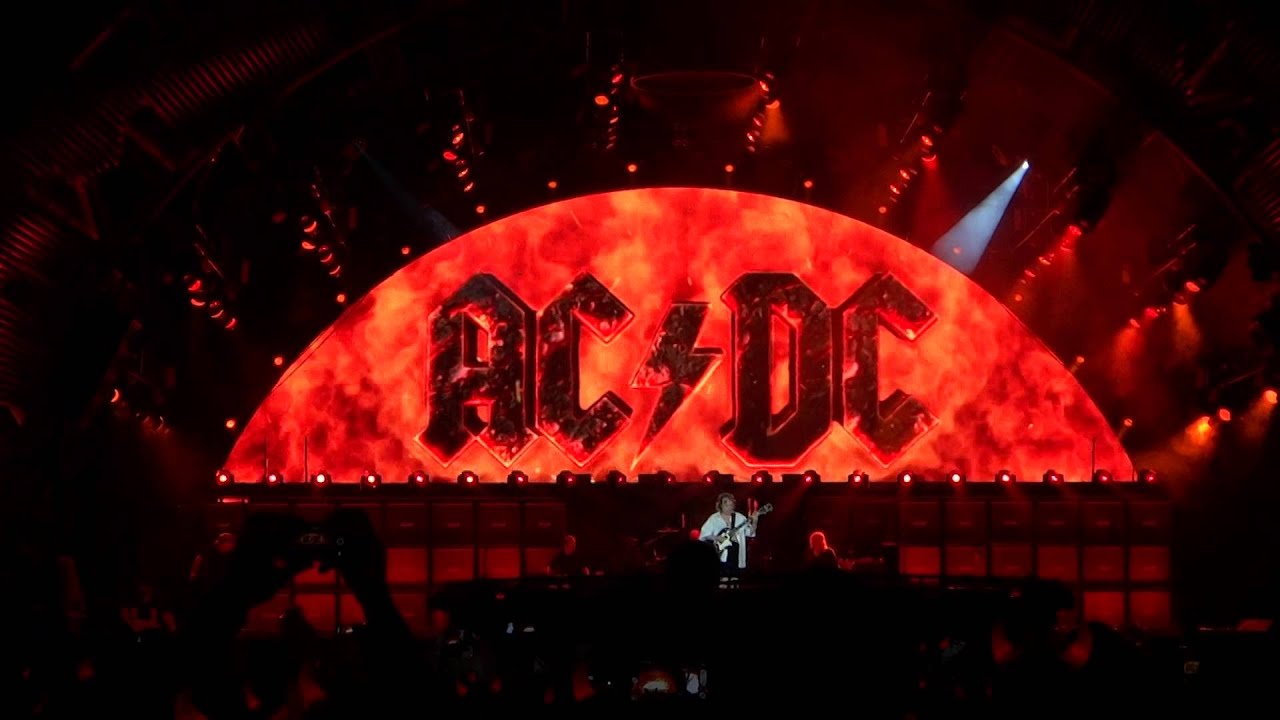
Highway to Hell" is the opening track of AC/DC's 1979 album Highway to Hell. It was initially released as a single in 1979.
The song was written by Angus Young, Malcolm Young and Bon Scott, with Angus Young credited for writing the guitar riff which became an instant classic. AC/DC had made several studio albums before and were constantly promoting them via a grueling tour schedule, referred to by Angus Young as being on a highway to hell.
Highway to Hell is an album by Australian hard rock band AC/DC. It was the band's fifth internationally released studio album and the sixth to be released in Australia. It was the last album featuring lead singer Bon Scott, who died early the following year on Tuesday, February 19, 1980.
By 1978, AC/DC had released five albums internationally and had toured Australia and Europe extensively. In 1977, they landed in America and, with virtually no radio support, began to amass a live following. The band's most recent album, the live If You Want Blood, had reached #13 in Britain, and the two albums previous to that, 1977's Let There Be Rock and 1978's Powerage, had seen the band find their raging, rhythm and blues-based hard rock sound. Although the American branch of Atlantic Records had rejected the group's 1976 LP Dirty Deeds Done Dirt Cheap, it now believed the band was poised to strike it big in the States if only they would work with a producer who could give them a radio-friendly sound. Since their 1975 Australian debut High Voltage, all of AC/DC's albums had been produced by George Young and Harry Vanda. According to the book AC/DC: Maximum Rock & Roll, the band was not enthusiastic about the idea, especially guitarists Angus Young and Malcolm Young, who felt a strong sense of loyalty to their older brother George:
Being told what to do was bad enough but what really pissed off Malcolm and Angus was they felt that George was being treated disrespectfully by Atlantic, like an amateur with no great track record when it came to production...Malcolm seemed less pleased with the situation and went so far as to tell Radio 2JJ in Sydney that the band had been virtually "forced" to go with an outside producer. Losing Harry was one thing. Losing George was almost literally like losing a sixth member of the band, and much more.
The producer Atlantic paired the band up with was South African-born Eddie Kramer, best known for his pioneering work as engineer for Jimi Hendrix but also for mega-bands Led Zeppelin and Kiss. Kramer met the band at Criteria Studios in Miami, Florida but, by all accounts, they did not get on. Geoff Barton quotes Malcolm Young in Guitar Legends magazine: "Kramer was a bit of a prat. He looked at Bon and said to us, 'Can your guy sing?' He might've sat behind the knobs for Hendrix, but he's certainly not Hendrix, I can tell you that much." Former AC/DC manager Michael Browning recalls in the 1994 book Highway to Hell: The Life and Times of AC/DC Legend Bon Scott, "I got a phone call from Malcolm in Florida, to say, 'This guy's hopeless, do something, he's trying to talk us into recording that Spencer Davis song,' 'Gimme Some Loving,' 'I'm a Man,' whatever it was..." Browning turned to Zambian-born producer Robert John "Mutt" Lange to step in. Lange was best known for producing the Boomtown Rats #1 hit "Rat Trap" and post-pub rock bands like Clover, City Boy, and Graham Parker. In 1979 singer Bon Scott told RAM magazine, "Three weeks in Miami and we hadn't written a thing with Kramer. So one day we told him we were going to have a day off and not to bother coming in. This was Saturday, and we snuck into the studio and on that one day we put down six songs, sent the tape to Lange and said, 'Will you work with us?'" The band had also signed up with new management, firing Michael Browning and hiring Peter Mensch, an aggressive American who had helped develop the careers of Aerosmith and Ted Nugent.
Recording commenced at the Roundhouse Studios in Chalk Farm, north London in March 1979. In his book Highway to Hell, Clinton Walker writes, "The band virtually moved into the Roundhouse Studios in Chalk Farm, spending the best part of three months there. That, to start with, was a shock to AC/DC, who had never previously spent more than three weeks on any one album...Sessions for the album - 15 hours a day, day-in day-out, for over two months - were grueling. Songs were worked and reworked." Lange's no-nonsense approach was appreciated by the band, whose own work ethic had always been solid. In an article by Mojo's Sylvie Simmons, Malcolm Young stated that Lange "liked the simplicity of a band. We were all minimalist. We felt it was the best way to be...He knew we were all dedicated so he sort of got it. But he made sure the tracks were solid, and he could hear if a snare just went off." In the same article Angus Young added, "He was meticulous about sound, getting right guitars and drums. He would zero in - and he was good too on the vocal side. Even Bon was impressed with how he could get his voice to sound." In AC/DC: Maximum Rock & Roll, Arnaud Durieux writes that Lange, a trained singer, showed Scott how to breathe so he could be a technically better singer on songs like "Touch Too Much" and would join in on background vocals himself, having to stand on the other side of the studio because his own voice was so distinctive. The melodic backing vocals was a new element to the band's sound, but the polish that Lange added did not detract from the band's characteristic crunch, thereby satisfying the band and Atlantic Records at the same time.
The album's most famous song is the title track. From the very beginning, Atlantic Records hated the idea of using the song as the album title, with Angus recalling to Guitar World's Alan Di Perna in 1993:
...just because you call an album Highway to Hell you get all kinds of grief. And all we'd done is describe what it's like to be on the road for four years, like we'd been. A lot of it was bus and car touring, with no real break. You crawl off the bus at four o'clock in the morning, and some journalist's doing a story and he says, 'What would you call an AC/DC tour?' Well, it was a highway to hell. It really was. When you're sleeping with the singer's socks two inches from your nose, that's pretty close to hell.
In a 2003 interview with Bill Crandall of Rolling Stone, Angus Young recalls the genesis of the song:
We were in Miami and we were flat broke. Malcolm and I were playing guitars in a rehearsal studio, and I said, "I think I have a good idea for an intro", which was the beginning of "Highway to Hell". And he hopped on a drum kit and he banged out the beat for me. There was a guy in there working with us and he took the cassette we had it on home and gave it to his kid, and his kid unraveled it [laughs]. Bon was good at fixing broken cassettes, and he pasted it back together. So at least we didn't lose the tune.
The words to "Highway to Hell" took on a new resonance when Scott drank himself to death in 1980. AllMusic's Steve Huey observes:
The lyrics displayed a fierce, stubborn independence in his choice of lifestyle ("Askin' nothin', leave me be"; "nobody's gonna slow me down"), but not really loneliness (of hell: "goin' down! party time! my friends are gonna be there too"). It's ironic that Scott seems most alive when facing death with the fearless bravado of "Highway to Hell", yet it's undeniably true, especially given his positively unhinged performance. The untutored ugliness of his voice; the playfulness with which he used it to his advantage; the wails, growls, screeches, and scratches - all these qualities combine to give the song an unbridled enthusiasm without which it might take on an air of ambivalence.
Bon Scott's lyrics on Highway to Hell deal almost exclusively with lust ("Love Hungry Man", "Girls Got Rhythm"), sex ("Beating Around the Bush", Touch Too Much", "Walk All Over You"), and partying on the town ("Get It Hot", "Shot Down in Flames"). In his 2006 band memoir, Murray Engelheart reveals that Scott felt the lyrics of songs like "Gone Shootin'" from the previous album Powerage were "simply too serious." "Touch Too Much" had been first recorded in July 1977 and features a radically different arrangement and lyrics from the Highway to Hell version. The final version of the song was performed by Scott and AC/DC on the BBC music show Top of the Pops a few days before his death in 1980. The song "If You Want Blood (You've Got It)" was the title of the band's live album from the previous year and stemmed from Scott's response to a journalist at the Day on the Green festival in July 1978 who asked what they could expect from the band and Scott replied, "Blood". Perhaps the album's most infamous song is "Night Prowler", mainly due to its association with serial killer Richard Ramírez. In June 1985, a highly publicised murder case began revolving around Ramírez, who was responsible for several brutal killings in Los Angeles. Nicknamed the "Night Stalker", Ramírez was a fan of AC/DC, particularly the song "Night Prowler". Police also claimed that Ramirez was wearing an AC/DC shirt and left an AC/DC hat at one of the crime scenes. During the trial, Ramírez often muttered "Hail Satan" and showed off the pentagram carved into his palm. This brought extremely bad publicity to AC/DC, whose concerts and albums faced protests by parents in Los Angeles.[4] On VH1's Behind the Music on AC/DC, the band maintained that the song had been given a murderous connotation by Ramírez, but is actually about a boy sneaking into his girlfriend's bedroom at night while her parents are asleep, in spite of the song having lyrics such as "And you don't feel the steel, till it's hanging out your back".[5] Musically, the song is similar to the band's previous song "Ride On" from Dirty Deeds Done Dirt Cheap", which is itself strikingly similar to ZZ Top's "Jesus Just Left Chicago." The final words spoken by Scott on the song are "Shazbot, na-nu na-nu", phrases used on the then-popular American sitcom, Mork and Mindy, by lead character Mork (a visiting extraterrestrial played by Robin Williams). The phrase closed the album.