Showing posts with label Keith Richards. Show all posts

Thursday, March 9, 2017

Beatles Vs. Rolling Stones Again It’s Beatles Vs. Rolling Stones Again With Paul McCartney Vs. Mick Jagger and Keith Richards At The Grammys – Who Should Win Best Rock Song?


(Photo : Facebook/The Beatles)


The 2014 Grammy Awards Best Rock Song category has us flashing back to 1964! Paul McCartney will go head-to-head with Mick Jagger & Keith Richards of the Rolling Stones for the Grammy for Best Rock Song.


McCartney’s “Cut Me Some Slack,” co-written and co-performed with Nirvana members Dave Grohl, Krist Novoselic and Pat Smear, is up against Jagger’s and Richards’ “Doom and Gloom,” performed by the Rolling Stones (the Grammy goes to the songwriters).


The other songs in the category are “Ain’t Messin ‘Round” by Gary Clark Jr., “God Is Dead?” by Black Sabbath, and “Panic Station” by Muse, but we’re interested in seeing that Beatles Vs. Stones rivalry revived!


The Beatles and the Rolling Stones were often pitted against each other in the early 1960s, when the Beatles were known for their clean-cut image and the Rolling Stones were rock’s biggest bad boys. The two bands went head-to-head in the charts and for awards, but it was mostly a good-natured rivalry. Behind the scenes, the bands were friendly, and McCartney and Richards still hang out to this day – and have talked about making a record together.

“We were really pleased to see each other. We fell straight in, talking about the past, talking about songwriting,” Richards wrote of McCartney in his memoir Life.


“We talked about such strangely simple things as the difference between the Beatles and Stones, and that the Beatles were a vocal band because they could all sing the lead vocal, and we were more of a musicians’ band–we had only one front man.”


However friendly McCartney and Richards may be, however, only one of them can go home with the Grammy! 


Labels: .

Sunday, January 1, 2017

The Rolling Stones - Midnight Rambler


"Midnight Rambler"


Did you hear about the midnight rambler
Everybody got to go
Did you hear about the midnight rambler
The one that shut the kitchen door
He don't give a hoot of warning
Wrapped up in a black cat cloak
He don't go in the light of the morning
He split the time the cock'rel crows
Talkin' about the midnight gambler
The one you never seen before
Talkin' about the midnight gambler
Did you see him jump the garden wall
Sighin' down the wind so sad
Listen and you'll hear him moan
Talkin' about the midnight gambler
Everybody got to go
Did you hear about the midnight rambler
Well, honey, it's no rock 'n' roll show
Well, I'm talkin' about the midnight gambler
Yeah, the one you never seen before
[ad lib]
Well you heard about the Boston...
It's not one of those
Well, talkin' 'bout the midnight...sh...
The one that closed the bedroom door
I'm called the hit-and-run raper in anger
The knife-sharpened tippie-toe...
Or just the shoot 'em dead, brainbell jangler
You know, the one you never seen before
So if you ever meet the midnight rambler
Coming down your marble hall
Well he's pouncing like proud black panther
Well, you can say I, I told you so
Well, don't you listen for the midnight rambler
Play it easy, as you go
I'm gonna smash down all your plate glass windows
Put a fist, put a fist through your steel-plated door
Did you hear about the midnight rambler
He'll leave his footprints up and down your hall
And did you hear about the midnight gambler
And did you see me make my midnight call
And if you ever catch the midnight rambler
I'll steal your mistress from under your nose
I'll go easy with your cold fanged anger
I'll stick my knife right down your throat, baby
And it hurts!


In this song, Mick Jagger takes on the persona of killer who is stalking his victim. This character calls himself the "midnight rambler" and he seems to relish his notoriety - much like many real-life serial killers.

A likely inspiration for the lyric is the case of the Boston Strangler. Thirteen women were found dead (many had been sexually assaulted) in and around Boston from 1962-1964. Most of the victims had been strangled and were found with their nylon stockings tied in a bow around their necks.

In 1965, Albert DeSalvo, who was serving time in a mental institution on rape charges, confessed to the murders and was later sentenced to life in prison. There was no clear physical evidence that DeSalvo committed the crimes, however, and his confession has been questioned, with some forensic experts stating that there may have been multiple killers. DeSalvo died in prison in 1973; new evidence has come up in the case from time to time.

As for the song, while the lyrics do not directly relate to the case, Jagger implies it when he sings, "Well you heard about the Boston..." before an instrumental stab cuts him off.
The Stones played this in 1969 and throughout the '70s at their concerts, and when they did, it was a showstopper. Mick Jagger created a morbid atmosphere as he took the role of the killer, spastically whipping the floor toward the end of the song as the audience would scream along.

These performances were enhanced by a custom light rig that their lighting director, Chip Monck, created for the band's 1969 US tour. This was the first lighting system to travel with a rock band, and The Stones used it to great effect on this song. At the climax, the lights would shine red on Jagger in a very theatrical moment.

Mick Jagger: "That's a song Keith and I really wrote together. We were on a holiday in Italy. In this very beautiful hill town, Positano, for a few nights. Why we should write such a dark song in this beautiful, sunny place, I really don't know. We wrote everything there - the tempo changes, everything. And I'm playing the harmonica in these little cafés, and there's Keith with the guitar." >>
Brian Jones is credited on percussion. Even though he died before this album was released, a few of the songs were recorded during the Beggar's Banquet sessions in 1968. "Midnight Rambler" was one of them..Mick Taylor added an extra guitar to the live performances of this. The live version can be heard on Get Yer Ya-Yas Out.

When Mick Jagger performed this in character on stage, it was good preparation for his acting career. In 1970, he appeared in two films: Ned Kelly and Performance. He would later appear in Freejack (1992) and The Man from Elysian Fields (2001).Keith Richards: "When we did Midnight Rambler, nobody went in there with the idea of doing a blues opera, basically. Or a blues in four parts. That's just the way it turned out. I think that's the strength of the Stones or any good band. You can give them a song half raw and they'll cook it."

Midnight Rambler


"Midnight Rambler"
Song by The Rolling Stones from the album Let It Bleed
Released5 December 1969
RecordedSpring 1969, Olympic Sound Studios, Trident Studios
GenreBlues rock
Length6:53 (album version)
9:43 (live version "Get yer Ya Ya's Out")
12:49 (live version "Brussels Affair")
LabelDecca Records/ABKCO
Writer(s)Jagger/Richards
Producer(s)Jimmy Miller
Let It Bleed track listing
"Midnight Rambler" is a song by the English rock band The Rolling Stones, released on their 1969 album Let It Bleed. The song is a loose biography of Albert DeSalvo, who confessed to being the Boston Strangler.
Keith Richards has called the number "a blues opera" and the quintessential Jagger-Richards song, stating in the 2012 documentary Crossfire Hurricane that "nobody else could have written that song."

Composition and recordings

On the composing of the song, Mick Jagger said in a 1995 interview with Rolling Stone, "That's a song Keith and I really wrote together. We were on a holiday in Italy. In this very beautiful hill town, Positano, for a few nights. Why we should write such a dark song in this beautiful, sunny place, I really don't know. We wrote everything there -- the tempo changes, everything. And I'm playing the harmonica in these little cafes, and there's Keith with the guitar." When asked about the song in a 1971 interview with Rolling Stone magazine, Richards said: "Usually when you write, you just kick Mick off on something and let him fly on it, just let it roll out and listen to it and start to pick up on certain words that are coming through, and it's built up on that. A lot of people still complain they can't hear the voice properly. If the words come through it's fine, if they don't, that's all right too, because anyway that can mean a thousand different things to anybody."
Did you hear about the midnight rambler
Well, honey, it's no rock 'n' roll show
Well, I'm a-talkin' about the midnight gambler
Yeah, the one you never seen before
The studio version of the track (which runs six minutes and fifty-three seconds) was recorded during the spring of 1969 at London's Olympic Sound Studios and Trident Studios. Jagger performs vocals and harmonica, while Richards plays all the guitars on the track, using standard tuning for the main guitars and open E tuning for the slide. Bill Wyman plays bass and Charlie Watts drums, while multi-instrumentalist Brian Jones is credited with playing the congas.[6] The song bears similarity to "The Boudoir Stomp" and "Edward's Thrump Up", recorded in April 1969 by the band minus Keith Richards and Brian Jones, featuring Ry Cooder on guitar and Nicky Hopkins on piano. The sessions were released on the 1972 LP, Jamming With Edward.
Jones' percussion is pretty much inaudible throughout the track and even though he may have participated during the recording sessions, it is possible that his contribution was not used in the final mix. James Hector, who wrote the 1995 Omnibus Press published book The Complete Guide to the Music of The Rolling Stones has speculated that the credit may have been a mere gift to Jones from his former band mates.
The Rolling Stones debuted "Midnight Rambler" on stage on 5 July 1969 and performed it regularly in concert through 1976; performances frequently included Jagger crawling around and lashing the stage with his belt. One notable 1969 performance (running just over nine minutes) was captured for the 1970 album, Get Yer Ya-Ya's Out! and was re-released on the 1971 compilation album Hot Rocks 1964-1971. This rendition features Mick Taylor on lead guitar, in addition to Jagger, Richards, Wyman and Watts. Versions from 1975 following the departure of Taylor from the band feature Ronnie Wood instead of Taylor.
"Midnight Rambler" returned to the Rolling Stones' stage repertoire in 1989 and has remained a powerful concert favourite ever since. The January 2003 rendition featured in the Stones' concert collection Four Flicks runs about twelve minutes, while a briefer July 1995 performance appears on Totally Stripped (2016). The Stones with special guest former band member Mick Taylor played the song at all the concerts of the 50 & Counting... tour, including 12-minute versions of "Midnight Rambler" during their 25 November 2012 concert at London's O2 Arena, at the 2013 Glastonbury Festival, and during their July 2013 Hyde Park concerts, as seen in Sweet Summer Sun: Hyde Park Live.

Personnel

Controversy

In his book The Better Angels of Our Nature, Steven Pinker discusses the song at length as an illustration of his thesis that the 1960s counterculture "pushed against" the Civilizing Process (identified by Norbert Elias), which, Pinker argues, had been reducing violence over many centuries, and that the counterculture's "glorification of dissoluteness shaded into indulgence of violence.... Personal violence was sometimes celebrated in song, as if it were just another form of antiestablishment protest." He says that "Midnight Rambler" "acted out a rape-murder by the Boston Strangler..." and he sees this as an example of how in the 1960s counterculture "the control of women's sexuality was seen as a perquisite" of men.


Tuesday, July 26, 2016

ACDC & The Rolling Stones - Rock Me Baby


"Rock Me Baby"

Rock me baby, rock me all night long
Rock me baby, honey, rock me all night long
I want you to rock me baby,
Like my back ain't got no bones

Roll me baby, like you roll a wagon wheel
I want you to roll me baby, like you roll a wagon wheel
Want you to roll me baby,
You don't know how it makes me feel

Rock me baby, honey, rock me slow
Yeah, rock me pretty baby, baby rock me slow
Want you to rock me baby,
Till I want no more


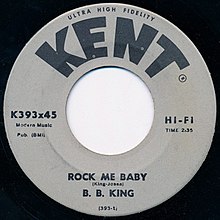
"Rock Me Baby"
Single by B.B. King
from the album Rock Me Baby
B-side"I Can't Lose"
ReleasedMay 1964
Format7-inch 45 rpm record
RecordedLos Angeles, California prior to January 14, 1962
GenreBlues
Length2:56
LabelKent (no. 393)
B.B. King singles chronology
"How Blue Can You Get"
(1964)
"Rock Me Baby"
(1964)
"Help The Poor"
(1964)
"Rock Me Baby" is a blues standard that has become one of the most recorded blues songs of all time.[2] When B.B. King's recording of "Rock Me Baby" was released in 1964, it became his first Top 40 hit. It is based on earlier blues songs and has been interpreted and recorded by numerous artists in a variety of styles.

Earlier songs

B.B. King's "Rock Me Baby" is based on "Rockin' and Rollin'", a song recorded by Lil' Son Jackson in 1950 (Imperial 5113). King's lyrics are nearly identical to Jackson's, although instrumentally the songs are different. "Rockin' and Rollin'" is a solo piece, with Jackson's vocal and guitar accompaniment, whereas "Rock Me Baby" is an ensemble piece.
Muddy Waters' song "Rock Me", recorded in 1956 (Chess 1652), is also based on Jackson's song. Some of Jackson's lyrics were used, but Waters incorporated a couple of verses from his 1951 song "All Night Long" (which is also based on "Rockin' and Rollin'") (Chess 1509). Muddy Waters' "Rock Me" also uses Jackson's guitar figure and the starting of the vocal on the IV chord and he interpreted it as an unusual fifteen-bar blues (an uneven number of measures, rather than the traditional twelve bars or somewhat less common eight or sixteen bars). Muddy Waters recorded a second version of "Rock Me" for his 1978 album I'm Ready.
Lil' Son Jackson's "Rockin' and Rollin'" was inspired by earlier blues songs Many songs from the 1920s through the 1940s have some combination of rock, roll, baby, and mama in the title or lyrics, although instrumentally they are different than "Rock Me Baby", "Rock Me", or "Rockin' and Rollin'". Big Bill Broonzy's 1940 song "Rockin' Chair Blues" makes frequent use of the phrase "rock me baby" as in "Rock me baby now, rock me slow ... now rock me baby, one time before you go" (OKeh 6116). Arthur Crudup's 1944 song, "Rock Me Mama", is based on Broonzy's song and repeats the same refrain, but uses "mama" in place of "baby" (Bluebird 34-0725). Curtis Jones' 1939 song "Roll Me Mama" shares a couple of phrases ("like a wagon wheel", "ain't got no bone") with "Rockin' and Rollin'" (Vocalion 4693).

B.B. King song

"Rock Me Baby" is a medium-tempo twelve-bar blues notated in the key of C in common or 4/4 time.[In addition to King's vocal and guitar, the song features a "tight, punchy arrangement underpinned by a pianist whose identity is in some doubt". Kent part-owner Joe Bihari recalled the pianist as King's frequent collaborator Maxwell Davis, although others have been suggested, such as Lloyd Glenn and Jimmy McCracklin.The arrangement "provides a blues structure that allows King room for biting guitar work" and appealed to many guitarists.
There is some confusion as to when B.B. King recorded "Rock Me Baby". Although King had signed to ABC-Paramount Records in January 14, 1962, his former label, Kent Records, continued to release singles (and albums) well into the 1970s from "many unreleased King masters ... thus forcing King to compete with himself". Recording dates have been estimated as "about 1958"[ to before 1962.[1] The song was released shortly after King's Paramount release "How Blue Can You Get" in 1964 and reached number 34 in the Billboard Hot 100.[6][7] "Rock Me Baby" was the first of six B.B. King records to reach the pop Top 40. In 1997, King re-recorded the song with Eric Clapton for the album Deuces Wild.

Recordings by other artists

Over the years, many blues and other artists have interpreted and recorded "Rock Me Baby". Although "most contemporary versions are based on Lil' Son Jackson's 1951 record, 'Rockin' and Rollin'", "B.B. King and Muddy Waters can share credit for making it one of the most familiar blues songs of all time."
Some studio versions include Otis Redding from Otis Blue: Otis Redding Sings Soul (1965), the Animals from Animalism (1966), Jeff Beck as "Rock My Plimsoul" from the Truth album with slightly altered lyrics (1968), Slim Harpo in his Tip On In album (1968, also with altered lyrics), Blue Cheer from Vincebus Eruptum (1968), Lightnin' Hopkins from Lightnin', Vol. 1 (1969), Ike & Tina Turner from Outta Season (1969), Lee Michaelsfrom 5th (1973) Robin Trower from Twice Removed from Yesterday (1973), Johnny Winter from Still Alive and Well (1973), Frank Marino &Mahogany Rush from What's Next (1980), Hot Tuna from Historic Hot Tuna (1985), Tina Turner from What's Love Got to Do With It (1993), Pappofrom Buscando un Amor (2003), and Steve Miller Band from Bingo! (2010).
Live versions include those by Jimi Hendrix from Historic Performances Recorded at the Monterey International Pop Festival (1967, released 1970), Jefferson Airplane from Bless Its Pointed Little Head (1968), the Doors from Live in Detroit as part of medley with "Heartbreak Hotel" (1970),Deep Purple from Made in Europe as part of medley with "Mistreated" (1976), Eddy Clearwater from Black Night (1979), and the Rolling Stonesfrom Live Licks (2003).

Tuesday, March 29, 2016

I Can't Get No- Satisfaction -The Rolling Stones - Glastonbury 2013 (HD)


Rolling Stones at Glastonbury
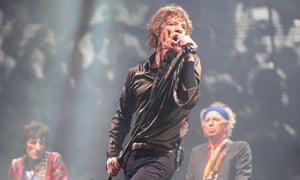
 Midnight ramblers: Ronnie Wood, Mick Jagger and Keith Richards of the Rolling Stones at Glastonbury. 

In the pre-internet age, the Glastonbury festival was famously a hive of bizarre rumours about what was going on in the outside world. For a period in the early 90s, a story seemed to be passed around every year that Cliff Richard had died, while in 1995, the news that John Redwood was launching a leadership challenge to then-prime minister John Major somehow got mangled into a report that the entire Tory government had resigned en masse.

The rise of the web and the smartphone was supposed to have done for that kind of thing, but this year the spirit of the unlikely Glastonbury rumour seems to be abroad once again, although this time the stories are concerned not with the sad demise of the tennis-loving Peter Pan of Pop, but with a plethora of secret guest appearances. Lady Gaga is supposed to be turning up. Almost nowhere in the festival is safe from an imminent guerilla gig by Daft Punk. And David Bowie, we are earnestly informed, is going to appear on stage with the Rolling Stones, giving rise to the flatly horrifying thought that he and Mick Jagger might favour us with their cover version of Dancing in the Street.


By the time the Rolling Stones arrive, the crowd in front of the Pyramid stage has swelled to 100,000, something you might have predicted had you noted the sheer number of people walking around the site in Stones T-shirts: it's hard to think of another Glastonbury that's been so conclusively overtaken by a solitary headlining act. As U2 discovered a few years back, parachuting a hugely successful band in to headline Glastonbury doesn't always work, something of which Jagger at least appears aware. For someone with a reputation for lofty diffidence, he seems to have been on a charm offensive for weeks: no sooner had their headline slot been announced than he took to Twitter to claim, a little implausibly, that he was going to stay on site in a yurt. The charm offensive carries over into their set. Just as he joked about the cost of the seats at last November's O2 performance, he jokes about Glastonbury's dogged pursuit of the band over the years: "So, they finally asked us."
If mention of his actual sleeping arrangements is conspicuous by its absence, Jagger mentions having spent the previous night at the festival: "I went to Shangri-La!" he says, sounding as ever, exactly like a man doing an impersonation of Mick Jagger. "I saw the Arctic Monkeys." Indeed, so keen is he to underline his awareness that this show is more than just another stop off on the Stones' 50th Anniversary Tour, he has reworked the song Factory Girl for the occasion: Glastonbury Girl makes reference to wet wipes, inhaling nitrous oxide, camping and ecstasy.


The Rolling Stones on the Pyramid stage
 The Stones: thrillingly ramshackle. Photograph: Anthony Devlin/PA

What's striking about the other songs they perform is how thrillingly ramshackle the Stones sound. In contrast to most of their stadium-filling peers, you can hear the imperfections, the occasional fluffed notes. They sound like a real band, rather than bored multimillionaires going through the motions, which adds a genuine edge to the big hits: Wild Horses should be dulled by overfamiliarity, but it packs an emotional punch. It's a sense heightened by their evident delight at having former guitarist Mick Taylor back on stage with them – a delight not shared entirely by the audience, which thins out a bit during the lengthy versions of You Got the Silver and Midnight Rambler – and the set's occasional surprises: they perform a fantastic version of 2,000 Light Years From Home, from the most reviled of their 60s albums, the psychedelic folly Their Satanic Majesties Request.
As they play Sympathy for the Devil, the scrap-metal phoenix at the top of the Pyramid stage begins to slowly rise up and belch out fire. In the crowd, people are letting off flares and red smoke billows around. It's incredibly exciting: one of those much-vaunted Glastonbury moments.

(I Can't Get No) Satisfaction


"(I Can't Get No) Satisfaction"
Single by The Rolling Stones
from the album Out of Our Heads (US)
B-side
Released
  • 6 June 1965 (US)
  • 20 August 1965 (UK)
Format7", 12"
Recorded12 May 1965, RCA Studios, Hollywood
Genre
Length3:44
Label
  • London 45-LON 9766 (UK)
  • Decca F12220 (US and Canada)
Writer(s)Jagger/Richards
Producer(s)Andrew Loog Oldham
CertificationGold (RIAA)
The Rolling Stones singles chronology
  • "(I Can't Get No) Satisfaction"
  • (1965)
"Get Off of My Cloud"
(1965)
Music sample
MENU
0:00
Music video
"(I Can't Get No) Satisfaction (Live)" (Official) on YouTube
"(I Can't Get No) Satisfaction" is a song by the English rock band The Rolling Stones, released in 1965. It was written by Mick Jagger and Keith Richards and produced by Andrew Loog Oldham. Richards' three-note guitar riff‍—‌intended to be replaced by horns‍—‌opens and drives the song. The lyrics refer to sexual frustration and commercialism.
The song was first released as a single in the United States in June 1965 and was also featured on the American version of the Rolling Stones' fourth studio album, Out of Our Heads, released that July. "Satisfaction" was a hit, giving the Stones their first number one in the US. In the UK, the song initially was played only on pirate radio stations, because its lyrics were considered too sexually suggestive. It later became the Rolling Stones' fourth number one in the United Kingdom.
The song is considered the greatest song the band ever recorded. In 2004, Rolling Stone magazine placed "Satisfaction" in the second spot on its list of "The 500 Greatest Songs of All Time". The song was added to the National Recording Registry of the Library of Congress in 2006.

Recording

Richards recorded the rough version of the riff in a hotel room. He ran through it once before falling asleep. He said when he listened back to it in the morning, there was about two minutes of acoustic guitar before you could hear him drop the pick and "then me snoring for the next forty minutes".
The Rolling Stones first recorded the track on 10 May 1965 at Chess Studios in Chicago – a version featuring Brian Jones on harmonica. The Stones lip-synched to a dub of this version the first time they debuted the song on ABC's Shindig. The group re-recorded it two days later at RCA Studios in Hollywood, with a different beat and the GibsonMaestro fuzzbox adding sustain to the sound of the guitar riff. Richards envisioned redoing the track later with a horn section playing the riff: "this was just a little sketch, because, to my mind, the fuzz tone was really there to denote what the horns would be doing." The other Rolling Stones, as well as producer and manager Andrew Loog Oldham and sound engineer David Hassinger eventually outvoted Richards and Jagger so the track was selected for release as a single. The song's success boosted sales of the Gibson fuzzbox so that the entire available stock sold out by the end of 1965.
Author Gary West cites a different source for the release of, "Satisfaction" in interviewing WTRY radio (Troy, NY) DJ Joe Condon. In the interview, Condon clearly states that his radio station began playing "Satisfaction" on 29 April 1965, making the above recording date impossible. It can be assumed that "Satisfaction" was probably recorded earlier in April, and that WTRY was playing a test pressing.
Like most of the Stones' pre-1966 recordings, "Satisfaction" was originally released in mono only. In the mid-1980s, a true stereo version of the song was released on German and Japanese editions of the CD reissue of Hot Rocks 1964-1971. The stereo mix features a piano (played by session player Jack Nitzsche, who also provides the song's iconic tambourine) and acoustic guitar that are barely audible in the original mono release (both instruments are also audible on a bootleg recording of the instrumental track). This stereo mix of "Satisfaction" also appeared on a radio-promo CD of rare stereo tracks provided to US radio stations in the mid-1980s, but has not yet been featured on a worldwide commercial CD; even later pressings of the German and Japanese Hot Rocks CDs feature the mono mix, making the earlier releases with the stereo mix collectors' items. For the worldwide 2002 reissue of Hot Rocks, an alternative quasi-stereo mix was used featuring the lead guitar, bass, drums, and vocals in the center channel and the acoustic guitar and piano "split" left and right via a delay effect.

Lyrics and melody


Guitar riff from "(I Can't Get No) Satisfaction"
The song opens with the guitar riff, which is joined by the bass halfway through. It is repeated three times with the drums and acoustic guitar before the vocal enters with the line: "I can't get no satisfaction". The key is E major, but with the 3rd and 7th degreeoccasionally lowered, creating - in the first part of the verses ("I can't get no ...") - a distinctive mellow sound. The accompanying chords (i.e. E major, D major and A major) are borrowed from the E mixolydian scale, which is often used in Blues and Rock.
The title line is an example of a negative concord. Jagger sings the verses in a tone hovering between cynical commentary and frustrated protest, and then leaps half singing and half yelling into the chorus, where the guitar riff reappears. The lyrics outline the singer's irritation with the increasing commercialism of the modern world, where the radio broadcasts "useless information" and a man on television tells him "how white my shirts can be – but he can't be a man 'cause he doesn't smoke the same cigarettes as me." Jagger also describes the stress of being a celebrity, and the tensions of touring. The reference in the verse to not getting any "girl reaction" was fairly controversial in its day, interpreted by some listeners (and radio programmers) as meaning a girl willing to have sex. Jagger commented that the dissers "didn't understand the dirtiest line", as afterwards the girl asks him to return the following week as she is "on a losing streak," an apparent reference to menstruation. The song closes with a fairly subdued repetition of the song's title, followed suddenly by a full shout of the line, with the final words repeated into the fade-out.
In its day the song was perceived as disturbing because of both its sexual connotations and the negative view of commercialism and other aspects of modern culture; critic Paul Gambaccini stated: "The lyrics to this were truly threatening to an older audience. This song was perceived as an attack on the status quo". When the Rolling Stones performed the song on Shindig! in 1965, the line "trying to make some girl" was censored although a performance on The Ed Sullivan Show on 13 February 1966 was uncensored. Forty years later, when the band performed three songs during the February 2006 Super Bowl XL halftime show, "Satisfaction" was the only one of the three songs not censored as it was broadcast.

Release and success

"Satisfaction" was released as a single in the US by London Records on 6 June 1965, with "The Under-Assistant West Coast Promotion Man" as its B-side. The single entered the Billboard Hot 100 charts in America in the week ending 12 June 1965, remaining there for 14 weeks, reaching the top on 10 July by displacing The Four Tops' "I Can't Help Myself (Sugar Pie Honey Bunch)". "Satisfaction" held the number one spot for four weeks, being knocked off on 7 August by "I'm Henry the Eighth, I Am" by Herman's Hermits. While in its eighth week on the American charts, the single was certified a gold record award by the RIAA for shipping over a million copies across the United States, giving the band their first of many gold disc awards in America. Later the song was also released by London Records onOut of Our Heads in America.[9] Billboard ranked the record as the No. 3 song of 1965.[20]
"Satisfaction" was not immediately released by Decca Records in Great Britain. Decca was already in the process of preparing a live Rolling Stones EP for release, so the new single did not come out in Britain until 20 August, with "The Spider and the Fly" on the B-side. The song peaked at number one for two weeks, replacingSonny & Cher's "I Got You Babe", between 11 and 25 September, before being toppled by the Walker Brothers' "Make It Easy on Yourself".
In the decades since its release, "Satisfaction" has repeatedly been acclaimed by the music industry. In 1976, Britain's New Musical Express listed "Satisfaction" 7th among the top 100 singles of all time. There was a resurgence of interest in the song after it was prominently featured in the 1979 movie Apocalypse Now. In 1991,Vox listed "Satisfaction" among "100 records that shook the world". In 1999, BMI named "Satisfaction" as the 91st-most performed song of the 20th century. In 2000, VH1 listed "Satisfaction" first among its "Top 100 Greatest Rock Songs"; the same year, "Satisfaction" also finished runner-up to "Yesterday" in a list jointly compiled by Rolling Stone and MTV.[23] In 2003, Q placed the song 68th out of its "1001 Best Songs Ever". In 2004, Rolling Stone's panel of judges named "Satisfaction" as the second-greatest song of all time, coming in second to Bob Dylan's "Like a Rolling Stone". Newsweek magazine has called the opening riff "five notes that shook the world".
Jagger said of "Satisfaction":
It was the song that really made the Rolling Stones, changed us from just another band into a huge, monster band... It has a very catchy title. It has a very catchy guitar riff. It has a great guitar sound, which was original at that time. And it captures a spirit of the times, which is very important in those kinds of songs... Which was alienation."[9]
The song has become a staple at Rolling Stones shows. They have performed it on nearly every tour since its release, and concert renditions have been included on the albums Got Live If You Want It!, Still Life, Flashpoint, Live Licks, Shine a Light, and Sweet Summer Sun: Hyde Park Live. One unusual rendition is included inRobert Frank's film Cocksucker Blues from the 1972 tour, when the song was performed by both the Rolling Stones and Stevie Wonder's band as the second half of a medley with Wonder's "Uptight".

Chart performance[edit]


ChartPeak
position
UK Singles Chart[18]1
Austrian Singles Chart1
Dutch Top 401
French Singles Chart3
German Singles Chart1
US Billboard Hot 100[26]1
US Billboard Top Selling Rhythm & Blues Singles[27]19
US Cashbox Top Singles[28]1